CLOSET DECLUTTERING
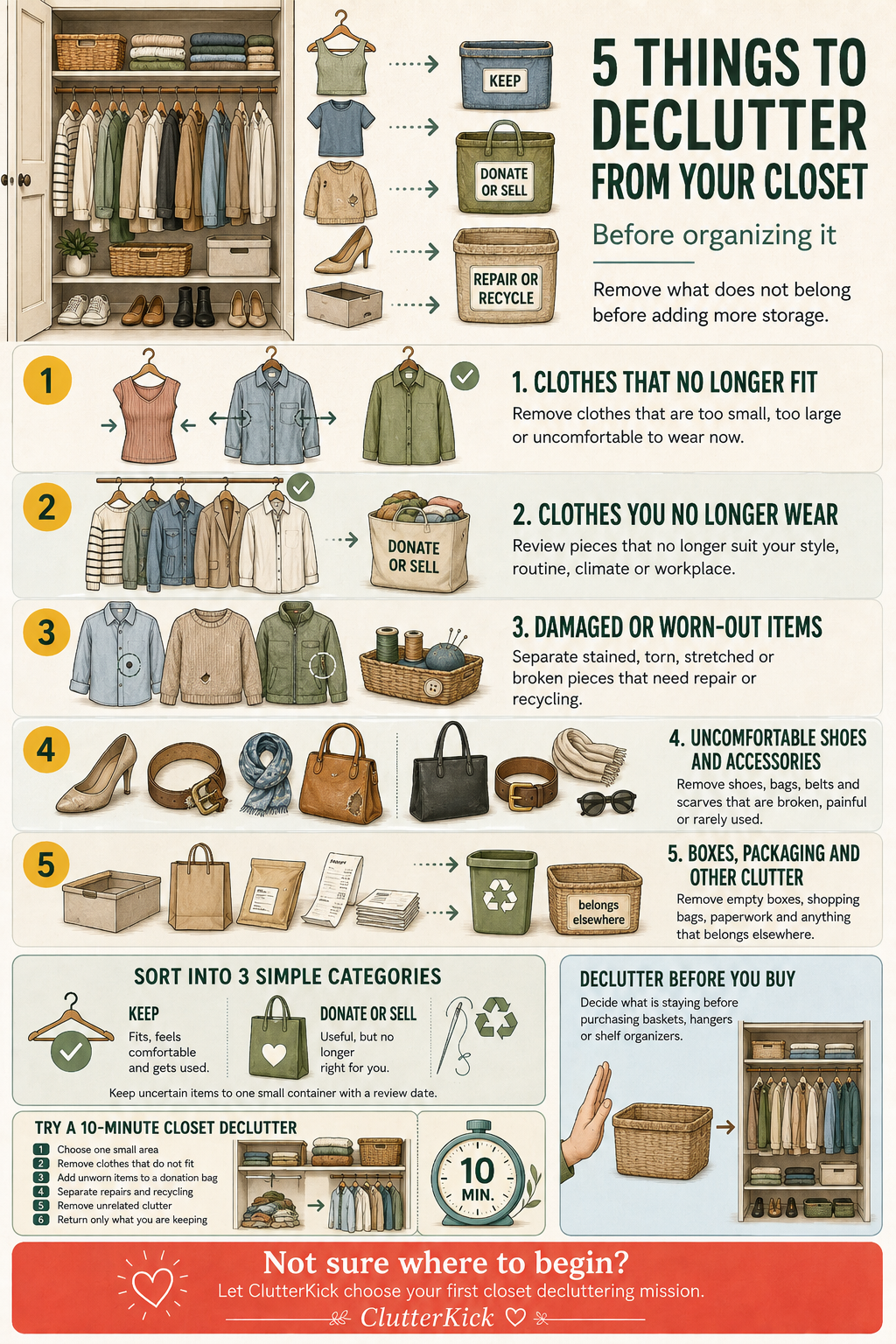
5 Things to Declutter From Your Closet Before Organizing It
Remove what no longer fits, gets worn or belongs in the closet before adding more storage.
A crowded closet can make getting dressed feel more difficult than it needs to be. Clothes become hidden behind other clothes, shoes pile up on the floor and items you rarely use occupy the easiest-to-reach spaces.
It may be tempting to solve the problem by buying new hangers, baskets or shelf organizers. However, adding storage products before deciding what should stay can make the closet feel even more crowded.
The best way to declutter a closet before organizing it is to remove clothes that no longer fit, items you no longer wear, damaged pieces, uncomfortable shoes and anything that does not belong in the closet. Once these items are gone, you can organize what remains according to how often you use it.
Here are five things to remove before you begin organizing your closet.
01 / REVIEW THE FIT
Clothes that no longer fit
Start with clothing that is clearly too small, too large or uncomfortable.
Try on anything you are uncertain about. Do not rely only on the size printed on the label because sizing can vary between brands and styles. Focus on how the item fits and whether you feel comfortable wearing it now.
Ask yourself:
- Does this item fit comfortably?
- Can I move easily while wearing it?
- Would I choose it if I were getting dressed today?
- Does it work with my current lifestyle?
- Am I keeping it only because I hope it will fit again?
You do not have to remove every item connected to a future size goal. However, clothes you cannot currently wear should not occupy all the most accessible space in your closet.
If you decide to keep a small number of them, place them in a clearly labelled container away from your everyday wardrobe. Give the container a physical limit so it does not continue growing.
02 / REVIEW WHAT GETS WORN
Clothes you no longer wear
An item can fit perfectly and still add unnecessary clutter.
Look for clothes that have remained untouched for a long time. They may no longer suit your style, routine, climate or workplace. You may also own several similar pieces but repeatedly choose the same one or two.
Consider why you are not wearing each item:
- It is difficult to match with other clothes
- It requires special care you rarely have time for
- The color or shape no longer feels right
- It belongs to a lifestyle or job you no longer have
- You always choose a more comfortable alternative
- You bought it for an event that has already passed
Avoid keeping something only because it was expensive. The money has already been spent, and leaving the item unworn in your closet will not recover it.
If deciding about the entire closet feels overwhelming, work through one category at a time. Start with shirts, trousers, dresses or jackets. You can also follow ClutterKick’s guide on how to declutter and organize a small closet without buying more storage for a broader step-by-step process.
03 / REPAIR OR RECYCLE
Damaged or worn-out items
Closets often contain clothes waiting for repairs that never happen.
Check for:
- Permanent stains
- Holes or torn seams
- Missing buttons
- Broken zips
- Stretched fabric
- Damaged elastic
- Excessive fading
- Shoes with badly worn soles
Decide whether each item is genuinely worth repairing. A loose button on a favorite shirt may be easy to fix. A heavily damaged item that is uncomfortable and rarely worn may not be worth the time or expense.
Create a small repair group and give yourself a clear deadline. If you have not repaired the items by that date, reconsider whether you really want to keep them.
Do not return damaged clothes to the main closet without a plan. They will take up space while continuing to be unavailable for use.
04 / REVIEW THE EXTRAS
Uncomfortable shoes and unused accessories
Shoes and accessories are easy to overlook because they occupy different parts of the closet.
Start with shoes that:
- Cause pain or blisters
- No longer fit properly
- Are difficult to walk in
- Have not been worn for a long time
- Are too damaged to repair
Be honest about uncomfortable shoes. If you repeatedly avoid wearing them, a new storage system is unlikely to change that.
Next, review belts, bags, scarves, hats and other relevant items. Remove pieces that are broken, uncomfortable or difficult to use with your current wardrobe.
Keep accessories that work with several outfits and are easy to reach. Special-occasion items can remain, but they do not need to occupy the most convenient everyday space.
If you are organizing a child’s closet and find toys mixed with clothing, move them to a more suitable location. ClutterKick’s guide to decluttering and organizing children’s toys can help you decide what should stay.
06 / MAKE THREE GROUPS
Use three simple decluttering categories
As you review the closet, sort items into three main categories:
Keep
These items fit, feel comfortable and suit your current routine. Return them to the closet only after you have finished decluttering.
Donate or sell
These items are in usable condition but no longer belong in your wardrobe. Place them directly into a bag or box and choose when they will leave your home.
Repair or recycle
This category is for damaged items that need a specific next step. Keep the group small and set a deadline for repairs.
Try to avoid creating a large “maybe” pile. If you are uncertain about a few items, place them in one small container and add a review date. If you do not look for or wear them before that date, you may find the final decision easier.
07 / TEN MINUTES
Try a 10-minute closet decluttering reset
You do not need to empty your entire closet in one afternoon.
Set a timer for 10 minutes and follow these steps:
- Choose one shelf, rail, drawer or clothing category.
- Remove anything that clearly does not fit.
- Add unworn items to a donation or selling bag.
- Separate damaged pieces that require repair or recycling.
- Remove packaging and unrelated clutter.
- Return only the items you have decided to keep.
Stop when the timer ends. Finish the current small area if possible, then choose another section during your next session.
Short, completed sessions are more useful than emptying the entire closet and becoming too overwhelmed to finish.
08 / FREQUENTLY ASKED QUESTIONS
Frequently asked questions about closet decluttering
What should I remove first when decluttering a closet?
Start with the easiest decisions: damaged clothing, empty packaging, items that do not belong and clothes that clearly no longer fit. Removing obvious clutter creates room to make the more difficult decisions.
How do I decide which clothes to keep?
Keep clothes that fit comfortably, suit your current lifestyle and are likely to be worn. If an item fits but is repeatedly ignored, consider whether you genuinely prefer it over the alternatives in your closet.
What should I do with sentimental clothing?
Move sentimental clothing away from your everyday wardrobe. Give it a separate memory box with a clear physical limit so meaningful pieces are protected without occupying your most useful closet space.
Should I buy closet organizers before decluttering?
Declutter first. You need to know what you are keeping before you can choose suitable organizers. After removing unwanted items, you may discover that your existing shelves, drawers and hangers provide enough space.
How long should it take to declutter a closet?
The time depends on the closet’s size and the number of decisions involved. You can complete a small category in 10 minutes or divide a larger closet into several short sessions. Finishing one contained area at a time is more important than working quickly.
DECLUTTER BEFORE ORGANIZING
Declutter first, then organize what remains
A closet becomes easier to organize when it contains clothes and accessories you genuinely use.
Remove items that no longer fit, clothes you do not wear, damaged pieces, uncomfortable shoes and anything that belongs somewhere else. Then arrange the remaining items according to how often you need them.
You may still decide to add a basket, shelf divider or set of hangers later. By decluttering first, you can choose storage based on a specific need instead of using organizers to hide excess belongings.
Not sure which part of your closet to tackle first? Let ClutterKick choose one small decluttering mission and focus only on that next step.
GET A MISSION One small decision creates space for the next one.