SMALL-SPACE DECLUTTERING
How to Declutter and Organize a Small Closet Without Buying More Storage
A crowded closet does not always need more shelves, boxes or storage products. It may simply need fewer things competing for the same space.
If your closet is full but you keep wearing the same handful of clothes, more storage probably is not the answer.
New boxes, dividers and matching hangers can make a closet look better for a while, but they do not solve the real problem if you are keeping clothes you no longer wear. Before buying another organizer, give yourself a chance to see what is actually taking up the space.
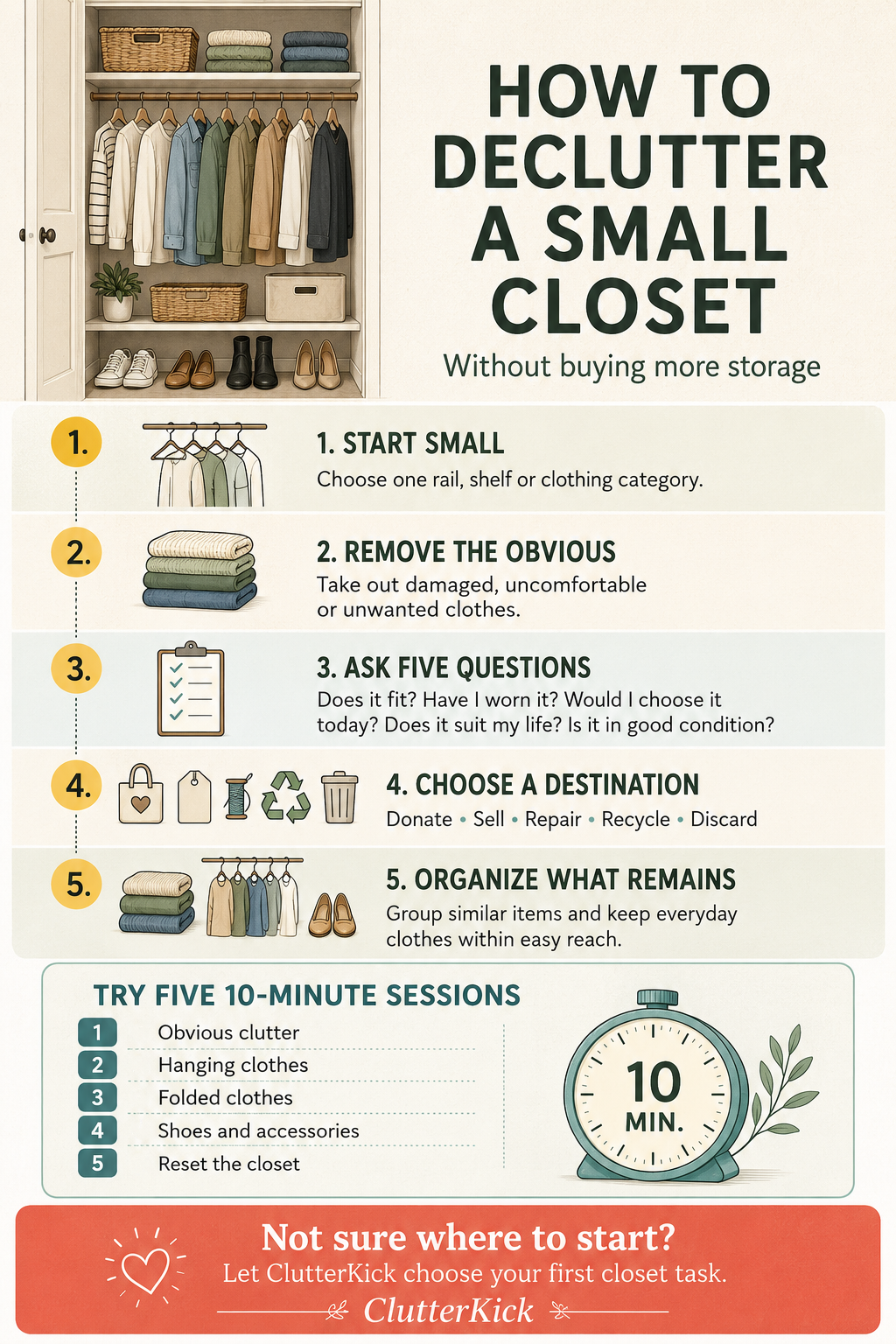
This guide explains how to declutter and organize a small closet without turning your bedroom into a mountain of clothes. You can complete the process in one afternoon or break it into several 10-minute sessions.
The goal is not to create a perfect capsule wardrobe. It is to make your closet easier to use every morning.
01 / QUICK START
The quickest way to declutter a small closet
If you want the short version, start here:
- Choose one section of the closet.
- Remove anything that is clearly damaged, uncomfortable or no longer wanted.
- Sort those items into donate, sell, repair and recycle.
- Return the clothes you genuinely wear.
- Organize what remains by type or frequency of use.
- Stop when the timer ends and continue another day if needed.
Do not empty the entire closet unless you know you have enough time and energy to finish. Pulling everything out at once often creates a bigger mess and makes the job feel harder than it needs to be.
A single rail, shelf or clothing category is enough for your first session.
02 / PREPARE
What you need before cleaning out your closet
You do not need to buy any closet organizers before you begin. Gather a few things you probably already have:
- One bag for donations
- One bag for textile recycling or rubbish
- A small basket for items that need repairs
- A box for anything you plan to sell
- A timer
- A damp cloth for wiping empty shelves
Label the bags before you start. Clear labels prevent you from creating several mystery piles that need to be sorted again later.
Choose a realistic amount of time. Ten focused minutes can be more useful than waiting for a completely free weekend.
03 / THE CHECKLIST
A step-by-step closet cleanout checklist
1. Begin with the easiest items
Start with decisions that require very little thought.
Look for empty boxes, dry-cleaning covers, broken hangers, old shopping bags and anything that clearly does not belong in the closet. Removing this background clutter gives you more room to work.
Next, identify clothes you already know you do not want. You may have a shirt you always skip, trousers that have never felt comfortable or a jacket you have been meaning to donate for months. Place those items in the appropriate bag and keep moving.
Easy decisions create visible space quickly. They also make the rest of the closet feel less intimidating.
2. Work through one clothing category at a time
Choose one category instead of jumping around the closet.
You could start with:
- T-shirts
- Shirts and blouses
- Trousers and jeans
- Dresses
- Jackets
- Sportswear
- Shoes
- Bags and accessories
Bring similar items together so you can see how many you own. It is much easier to notice duplicates when five similar black shirts are sitting next to each other.
Finish one category before starting another. This keeps the process controlled and makes it easier to pause without leaving the whole room in disorder.
3. Ask five useful questions
You do not need a complicated test for every item. Ask:
- Does this fit me comfortably now?
- Have I worn it during the past year?
- Would I choose it if I were getting dressed today?
- Does it suit my current work, routine and lifestyle?
- Is it in good enough condition to wear?
An item does not need to pass every question automatically. A formal outfit may be worth keeping even if you wear it only occasionally. The questions are there to help you notice clothes you are keeping through habit, guilt or indecision.
4. Decide where each unwanted item should go
Every item leaving the closet needs a clear destination.
DonateClean clothes in good condition that someone else could use.
SellHigher-value pieces that are worth the time required to photograph, list and post.
RepairClothes you genuinely like and will wear after a simple repair or alteration.
RecycleWorn or damaged textiles that are not suitable for donation.
DiscardItems that cannot be reused or recycled locally.
04 / MAKE SPACE
What clothes should you get rid of?
There is no universal number of clothes you should own. Your wardrobe should reflect your climate, work, hobbies, laundry schedule and personal style. Still, certain categories deserve a closer look during a closet cleanout.
Clothes that do not fit comfortably
Clothes should fit your body, not the other way around.
Keeping a small number of pieces for reasonable size changes may make sense. Keeping an entire second wardrobe that makes you feel guilty every time you open the door usually does not.
If an item is uncomfortable, unflattering or difficult to move in, ask whether you are honestly likely to wear it again.
Clothes you repeatedly avoid
You probably have clothes that look fine on a hanger but never make it through a full day.
Perhaps the fabric is irritating, the waistband moves, the sleeves feel awkward or the item needs constant adjustment. These problems rarely disappear.
If you have tried wearing something several times and always change out of it, let that experience guide your decision.
Duplicate clothing
Duplicates can be useful, especially for basics you wear regularly. Problems begin when the duplicates outnumber your actual needs.
Line up similar clothes and choose the versions you reach for most often. Compare fit, comfort, condition and ease of care.
You may discover that you own eight similar tops but regularly wear only three.
Clothes for a life you no longer live
Wardrobes often hold previous jobs, old hobbies, past dress codes and versions of ourselves we thought we would become.
You do not have to remove every item connected to your past. Just make sure those clothes are not pushing aside the things you need now.
Keep the best or most meaningful examples. Release the rest.
Damaged clothes with no repair plan
A missing button can be fixed. A small seam can be repaired. A badly stretched, stained or uncomfortable item may not be worth saving.
Move repairable clothes out of the main closet and give yourself a deadline. If the repair is still unfinished after that date, recycle or discard the item responsibly.
05 / THE MAYBE PILE
How to handle the “maybe” clothes
The maybe pile can quickly become the largest part of a closet cleanout.
Limit yourself to one small box or one short section of the rail. Add a review date, ideally within one to three months.
During that period, notice whether you look for any of those clothes. If you forget what is in the box, that is useful information.
06 / RESET
How to organize a small closet after decluttering
Organizing comes after decluttering, not before it.
Once you know what is staying, use the space according to how often you wear each item.
Keep everyday clothes within easy reach
The clothes you wear most often should occupy the easiest section of the closet. Occasion wear and seasonal pieces can go higher, lower or farther to the side. Do not give prime space to clothes you rarely use.
Group similar items together
Place shirts with shirts, trousers with trousers and dresses with dresses. Within each category, you can arrange items by color, sleeve length or frequency of use.
Choose the system that makes getting dressed easier. There is no prize for creating a beautiful arrangement that you cannot maintain.
Use the storage you already have
Before buying containers, look around your home.
An unused box can hold scarves. A small basket can collect belts. A spare shoebox can organize accessories. Existing shelf dividers may work better after you remove excess clothing.
The best small closet organization ideas are often the simplest ones.
Leave some open space
A closet should not be packed so tightly that removing one shirt pulls three others with it.
A little breathing room makes clothes easier to see and reduces creasing. It also gives you a clear warning when the closet starts filling up again.
07 / FIVE SHORT SESSIONS
A five-session plan for decluttering clothes
You do not have to finish everything in one day. Try this schedule:
Remove the obvious clutter
Spend 10 minutes removing rubbish, empty packaging, broken hangers and items that belong elsewhere.
Declutter hanging clothes
Work from one side of the rail to the other. Stop when the timer ends.
Declutter folded clothes
Choose one shelf or drawer. Compare duplicates and remove anything damaged or no longer worn.
Review shoes and accessories
Check comfort, condition and usefulness. Empty bags before sorting them.
Reset the closet
Wipe the shelves, group similar items and place frequently worn clothes within easy reach.
Five short sessions are often easier to manage than one exhausting cleanout.
08 / KEEP IT CLEAR
How to keep your closet from becoming cluttered again
Maintaining a small closet requires less effort than repeating a major cleanout.
Try these habits:
- Keep a small donation bag in or near the closet.
- Review one clothing category at the start of each season.
- Remove empty packaging and damaged hangers immediately.
- Reconsider similar items before buying something new.
- Return clothes to the same category after laundry.
- Complete a quick 10-minute closet reset once a month.
You can also use a one-in, one-out rule for categories that are already full. If you buy a new pair of shoes, decide whether an older pair should leave.
The rule does not need to apply to every purchase. Use it where your available space is genuinely limited.
09 / FREQUENTLY ASKED QUESTIONS
Small-closet decluttering questions
How long does it take to declutter a small closet?
A straightforward closet cleanout may take between 30 minutes and a few hours, depending on how many items you own and how difficult the decisions feel. You can divide the work into 10-minute sessions if completing it at once feels overwhelming.
Should I remove everything from my closet?
Not necessarily. Emptying the entire closet works when you have enough time to sort and return everything the same day. Otherwise, working through one rail, shelf or clothing category at a time is usually easier.
How many clothes should I keep?
There is no correct number. Keep enough clothing for your lifestyle, work, climate, laundry routine and personal preferences.
Should I organize or declutter first?
Declutter first. Organizing unwanted clothing uses time and storage space without making the closet easier to use. Once you know what you are keeping, you can create a simpler organization system around those items.
CHOOSE ONE SMALL TASK TODAY
You do not need to clean out the entire closet before making progress.
Remove five unwanted items. Sort one shelf. Check the shoes you never wear. Spend 10 minutes on the most crowded section.
If you are still unsure where to begin, let ClutterKick choose a quick closet mission for you.
GET A MISSION One small decision creates space for the next one.