CAR ORGANIZATION
5 Road Trip Car Organization Ideas for a Clutter-Free Drive
Use five simple storage zones to keep passengers, snacks, travel essentials and luggage organized.
A road trip can make even a tidy car feel cluttered. Snack wrappers collect in door pockets, charging cables become tangled and items needed during the journey end up buried underneath luggage.
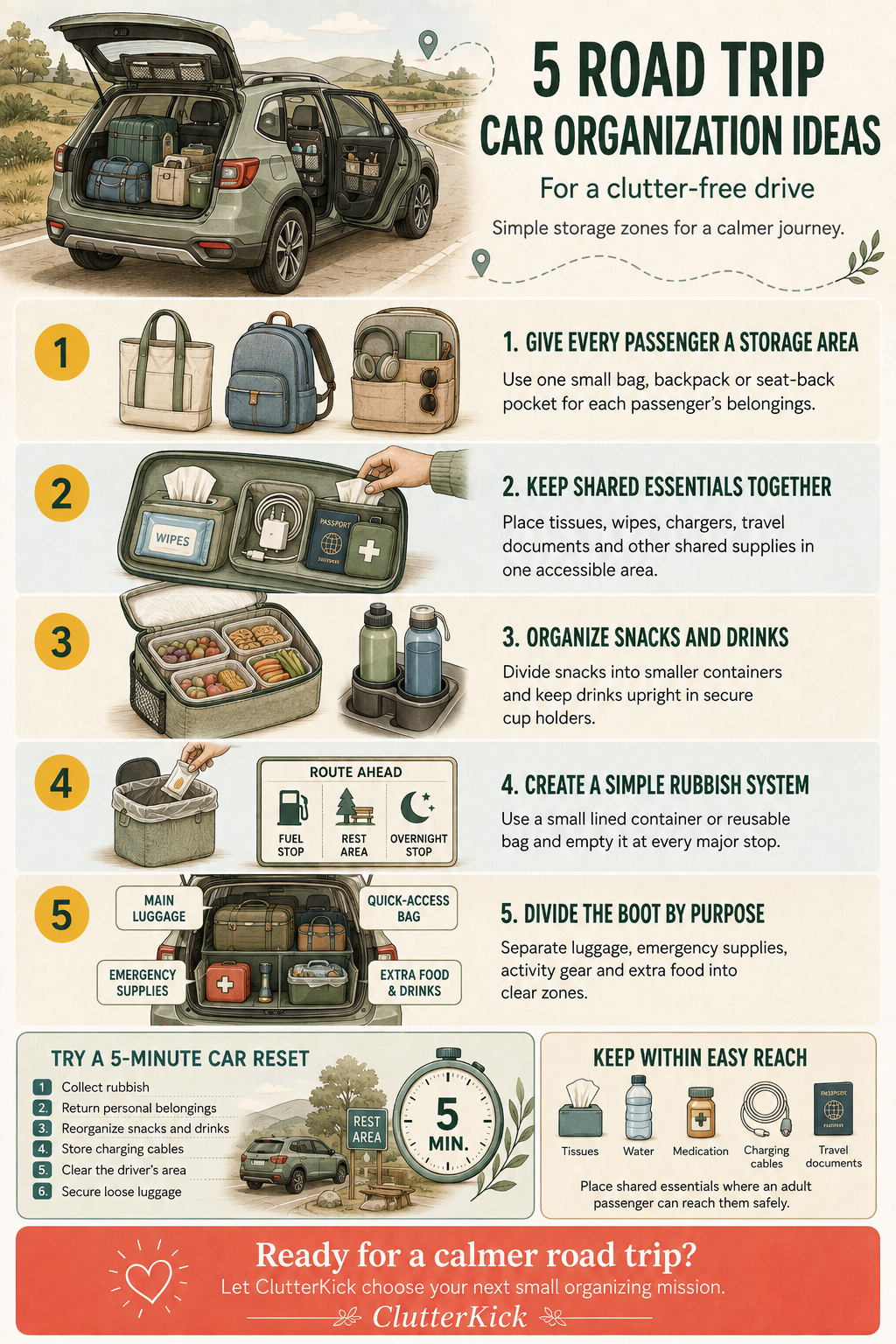
The best way to organize a car for a road trip is to divide it into a few simple storage zones. Give passengers a place for personal belongings, keep shared essentials together, organize food separately and secure larger items in the boot or trunk.
You do not need to buy a collection of special car organizers. A few reusable bags, small containers and regular resets can make the car easier to use throughout the journey.
Here are five practical road trip car organization ideas for a calmer, clutter-free drive.
01 / PERSONAL STORAGE
Give every passenger a personal storage area
Start by giving each passenger one place for the items they want to use during the journey.
This could be:
- A small reusable bag
- A backpack
- A seat-back pocket
- A soft basket placed securely on the floor
- An existing compartment in the car
Personal storage can hold books, headphones, sunglasses, travel games and other small belongings. It prevents these items from spreading across seats, cup holders and the floor.
Keep the system simple. Each person should be able to recognize their own storage area and return items without reorganizing the whole car.
Avoid filling personal bags with too many activities. Choose a few items that passengers are likely to use and place everything else in the boot or trunk. A smaller collection is easier to manage than a large bag that has to be searched repeatedly.
At every stop, ask passengers to return their belongings to their assigned bags before the journey continues.
03 / FOOD AND DRINKS
Organize road trip snacks and drinks
Food can create clutter quickly, especially when large packets are repeatedly opened and passed around the car.
Before leaving, divide suitable snacks into smaller reusable containers or bags. This reduces bulky packaging and makes it easier to give each passenger a reasonable portion.
Group snacks into simple categories, such as:
- Savoury snacks
- Fruit
- Sweet snacks
- Food for young children
- Snacks for anyone with specific dietary needs
Keep drinks upright in secure cup holders or a stable carrier. Avoid balancing bottles on seats, where they can fall or roll onto the floor.
Pack the snacks needed during the next stage of the journey in the passenger area. Store additional supplies separately in the boot or trunk. This prevents passengers from searching through the full food supply every time they want something.
Include napkins or wipes with the snack bag and create a clear place for wrappers. If possible, choose food that is easy to hold and unlikely to spill, melt or leave crumbs everywhere.
04 / MANAGE RUBBISH
Create a simple rubbish system
A small rubbish system is one of the easiest ways to keep a car tidy on a long drive.
Use a lined container, a reusable rubbish bag or a small bag that can be closed securely. Place it where passengers can reach it without unfastening their seat belts.
The container should be large enough for ordinary travel rubbish but small enough to empty regularly. Avoid allowing it to become an overflowing storage area.
Empty the rubbish at:
- Fuel stops
- Rest areas
- Meal breaks
- Overnight stops
- Your final destination
Encourage everyone to use the rubbish container immediately instead of leaving wrappers in cup holders or door pockets.
05 / LUGGAGE ZONES
Divide the boot or trunk by purpose
The boot or trunk can become difficult to use when luggage, emergency equipment and items needed during the journey are mixed together.
Create a few broad zones:
- Main luggage
- Overnight or frequently needed bags
- Emergency supplies
- Outdoor or activity equipment
- Extra food and drinks
Place luggage that will not be needed until arrival farther back. Keep the next overnight bag or items required at the next stop closer to the opening.
Store emergency supplies in a location that remains accessible. Do not bury a first-aid kit, warning triangle or flashlight beneath several heavy suitcases.
06 / FIVE MINUTES
Try a five-minute car reset at every stop
A quick reset prevents small amounts of mess from becoming a larger job at the end of the trip.
When the car is safely parked, spend five minutes on these steps:
- Collect wrappers and other rubbish.
- Return personal belongings to their assigned bags.
- Reorganize snacks, drinks and shared essentials.
- Untangle and store charging cables.
- Check that the driver’s area is clear.
- Make sure luggage and loose items remain secure.
You do not need to clean the entire car at every stop. The aim is simply to restore the basic system before continuing.
At the end of each day, remove anything that does not need to remain in the vehicle. Take food, rubbish and overnight bags inside, then return only what is required for the next stage of the journey.
07 / FREQUENTLY ASKED QUESTIONS
Frequently asked questions about road trip car organization
How do you organize a car for a road trip?
Divide the car into simple zones for personal belongings, shared essentials, snacks, rubbish and luggage. Keep frequently used items accessible to passengers, store occasional items in the boot or trunk and secure anything that could move during the drive.
What should be kept within reach during a long drive?
Keep tissues, wipes, water, necessary medication, charging cables and travel documents somewhere an adult passenger can reach safely.
How can I organize road trip snacks?
Divide snacks into smaller containers, group them by type and keep only the amount needed for the next part of the journey in the passenger area. Pack wipes or napkins with the food and provide a separate bag for wrappers.
How do I organize a car without buying special organizers?
Use bags, pouches, baskets and food containers you already own. Assign each one a clear purpose and test the arrangement before purchasing any additional storage products.
What is the best way to organize a car boot for travel?
Group luggage by when it will be needed. Place frequently used bags near the opening, keep emergency supplies accessible and secure larger items so they cannot shift. Avoid loading the vehicle in a way that blocks visibility or exceeds its cargo limit.
KEEP IT SIMPLE
A clutter-free road trip starts with a few simple zones
Car organization does not need to be complicated. Give each passenger a personal storage area, keep shared essentials together, separate snacks from other supplies and provide one obvious place for rubbish.
In the boot or trunk, arrange luggage according to when it will be needed and make sure larger items are secure.
A five-minute reset at each stop will help the system last throughout the journey. With fewer loose items and less time spent searching, everyone can enjoy a calmer and more comfortable drive.
Not sure what to organize next? Let ClutterKick choose one small decluttering mission and focus only on that next step.
GET A MISSION One small decision creates space for the next one.